
International Women’s Day in India: Progress, Patriarchy, and the Path Forward
Every year on International Women’s Day, social media fills with inspirational quotes, brand campaigns, and messages celebrating women’s achievements. While these celebrations are important, they should also be accompanied by an honest conversation about the reality women face—especially in a complex and diverse country like India. India’s story when it comes to women is both inspiring and contradictory.
International Women’s Day in India: Progress, Patriarchy, and the Path Forward
Every year on International Women’s Day, social media fills with inspirational quotes, brand campaigns, and messages celebrating women’s achievements. While these celebrations are important, they should also be accompanied by an honest conversation about the reality women face—especially in a complex and diverse country like India.
India’s story when it comes to women is both inspiring and contradictory.
On one hand, the country celebrates women as symbols of power and strength. From mythology to modern politics, women have been revered as leaders, innovators, and changemakers. On the other hand, millions of women continue to navigate daily challenges shaped by patriarchy, social expectations, and systemic inequalities.
International Women’s Day is not just a celebration—it is an opportunity to reflect on where India stands and what still needs to change.
The Deep Roots of Patriarchy in Indian Society
Patriarchy in India does not always appear in obvious forms. Often, it exists quietly within traditions, cultural expectations, and everyday social norms.
It shows up when daughters are told to prioritize family responsibilities over their ambitions.
It appears when women must constantly prove their competence in workplaces where leadership is still predominantly male.
It emerges when women expressing opinions online face disproportionate criticism and harassment compared to men.
These patterns are not always intentional, but they are deeply embedded in social structures that have evolved over centuries.
In many households, boys are still encouraged to be independent and ambitious, while girls are often taught to be careful, obedient, and accommodating. Such conditioning shapes career choices, financial independence, and opportunities for women throughout their lives.
Progress That Cannot Be Ignored
Despite these challenges, India has witnessed remarkable progress in women’s empowerment over the past few decades.
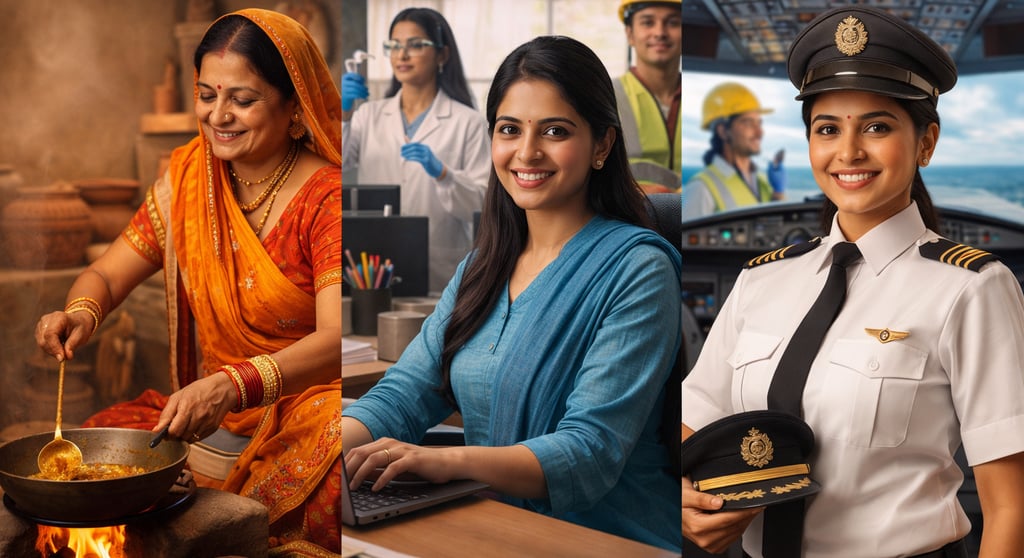
Women today are leading startups, running multinational companies, excelling in sports, advancing scientific research, and shaping public policy. Indian women are also increasingly visible in sectors that were traditionally male-dominated, including aviation, engineering, technology, and the armed forces.
Education has played a significant role in this transformation. As more girls gain access to higher education and professional opportunities, societal perceptions are slowly evolving.
However, progress remains uneven across regions.
States Where Women Are Thriving
Certain Indian states have consistently demonstrated stronger outcomes when it comes to women’s well-being, safety, and participation in society.
Kerala is often highlighted for its high female literacy rate and strong healthcare systems, which have contributed to better gender equality indicators.
Sikkim and Himachal Pradesh have also shown encouraging progress in women’s education and community participation.
These states offer an important lesson: when governments invest in education, healthcare, and social infrastructure, women are more empowered to participate fully in society.
The Challenges That Still Exist
While progress is real, many challenges remain.
India continues to face issues such as gender-based violence, unequal pay, low female workforce participation, and social pressures surrounding marriage and career choices.
According to several economic studies, India’s female labor force participation rate remains among the lowest for major global economies, highlighting a significant untapped potential.
When women are unable to participate fully in the economy, it does not just affect individuals—it affects national growth and innovation.
Women Are Redefining Leadership
One of the most powerful changes happening today is how women are redefining leadership itself.
Across India, women entrepreneurs are building companies that prioritize innovation, inclusivity, and social impact. Female athletes are bringing global recognition to the country. Women journalists, scientists, teachers, and artists are shaping the narratives that influence society.
Perhaps the most inspiring aspect of this transformation is that it is happening at every level—from rural communities to global platforms.
The Role of Society and Businesses
True gender equality cannot be achieved by women alone. It requires collective effort from families, communities, governments, and businesses.
Organizations must create workplaces that provide equal opportunities, fair pay, and supportive environments for women to thrive. Education systems must encourage girls to pursue diverse careers. Communities must challenge outdated norms that limit women’s potential.
When women succeed, societies become more prosperous, innovative, and resilient.
Moving Beyond Celebration
International Women’s Day should not only be about celebrating achievements—it should also be about addressing the gaps that still exist.
Real progress will come when every girl in India grows up with the same access to education, safety, opportunities, and freedom as anyone else.
A nation’s strength is reflected in how it treats its women.
And building a future where women are empowered is not just a social responsibility—it is a foundation for sustainable progress.
Ready to Scale Your Brand Online?
Your audience is already searching online; let’s make sure they find your business first.
At ScaleUp Marketing Solutions, we help brands grow through SEO, social media marketing, content, branding, and digital strategies designed to increase visibility, traffic, and conversions.
Quick Links
Contact Us
Call: +91-9926753404
Email: contact@sumsmarketing.com
partner@sumsmarketing.com
WhatsApp us here